What Can You Learn from Go? Seven Lessons from the Board
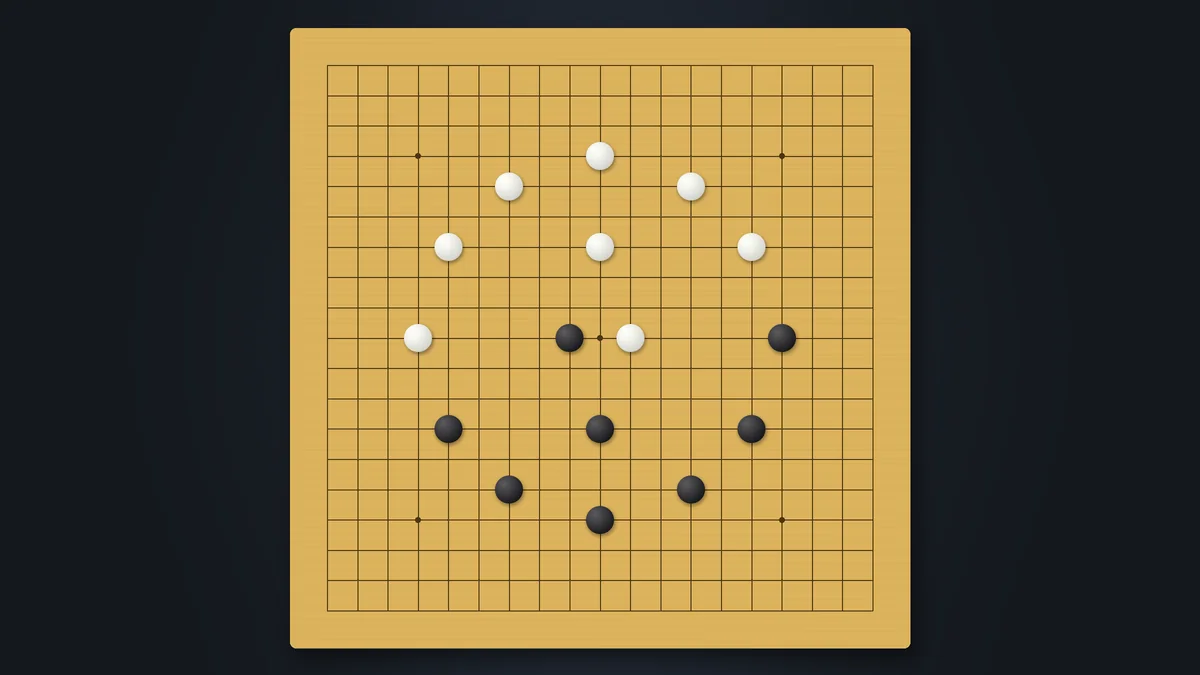
People who play Go for a long time tend to say the same thing: the game teaches you something beyond the game. In China, Korea and Japan this idea is very old. Go was counted among the arts a cultivated person should practise, and its proverbs are quoted in business, politics and everyday life.
This guide looks at what players actually learn at the board. These are habits of thought that the game rewards again and again, and nobody can promise they will change your life. Whether they carry over is up to each player, but few who play seriously doubt that the game leaves a mark.
1. Patience, because nothing is settled quickly
A game of Go on a full board takes around 250 moves. No single move wins it. A stone played in the opening may show its value a hundred moves later, and an attack launched too early usually helps the opponent.
One of the oldest pieces of Go advice, the Ten Golden Rules handed down from Tang-dynasty China, begins with the line "Greed does not bring victory". Beginners want to capture everything and win at once. Stronger players learn to wait, to build, and to take a small sure profit instead of a large risky one. The habit of not forcing matters is the first thing the game teaches.
2. Seeing the whole board
It is natural to stare at the corner where the fighting is. Go punishes that. The biggest move is often somewhere else entirely, and a player who wins a local battle while ignoring the rest of the board frequently loses the game.
Go players have a phrase for this: look at the whole board. Every few moves a good player lifts their eyes from the local position and asks where the largest point is now. It is practice in stepping back from the urgent to find the important, and it has to be repeated every game because the pull of the local fight never goes away.
3. Balance
Go is a game of trade-offs. Territory you take now against influence that may pay later. Attack against the safety of your own stones. Playing fast against playing thick. Lean too far in any direction and the position collapses.
There is no formula for the right balance, which is why the game is interesting. Players develop a feeling for it over thousands of positions. The same judgement, weighing what you gain against what you give, is what people usually mean when they say Go trains decision-making.
4. Letting go
Another of the Ten Golden Rules says "When in danger, sacrifice", and another, "Give up the small to take the large". Stones are not all worth saving. A weak group that you drag to safety can cost more than it is worth, while giving it up at the right moment can win the game elsewhere.
This is one of the hardest lessons, because nobody likes to lose what they have invested. Go shows the cost of stubbornness very clearly: the stones you refused to abandon are still on the board at the end, surrounded. Learning to sacrifice is learning to judge value coolly instead of by attachment.
5. Thinking from the other side
You cannot play Go alone in your head. Every plan must survive the opponent's best reply, so reading in Go always means asking "if I play here, what will they do?" and answering honestly.
Wishful reading, assuming the opponent will play the move you hope for, is the most common mistake at every level. The game steadily trains the opposite habit: take the other person's best move seriously, and then decide. Players often say that Go made them better at seeing a situation from someone else's position.
6. Learning from defeat
Every Go player loses, often. Even champions lose a large share of their serious games. What matters is what happens next. The custom after a game is the review: the two players go back through the game together, look for the losing move and discuss what would have been better.
Reviewing a loss is uncomfortable and extremely effective. It turns defeat into information. There is no luck in Go to blame, no dice and no hidden cards, so the result is your own, and so is the improvement. Many players say this is the most valuable habit they took from the game: look at your own mistake without excuses and without despair, fix it, and play again.
7. Respect
A game begins and ends with a greeting. Players thank each other, handle the stones quietly and do not distract an opponent who is thinking. In East Asia Go has an old name, "hand talk", because two people who share no language can still have a full conversation across the board.
That conversation is honest in a way that is rare. Your moves show how you think: cautious or bold, greedy or generous, calm or impatient. Playing regularly with someone is a way of getting to know them, and the respect that Go asks for is respect for a person who is trying, like you, to find the best move.
What about children?
Parents often ask whether Go is good for children. The game does ask a child to sit still, think before acting, accept a loss and try again, and many teachers value it for exactly those reasons. It is also simply fun, and children learn the rules quickly. Whether it makes anyone smarter is a different question, which we treat carefully in Does Playing Go Make You Smarter?.
Learning these lessons yourself
None of this comes from reading about Go. It comes from playing, losing, reviewing and playing again. The lessons arrive slowly, in the same order as your strength.
If you have never played, start with What Is Go? and the first chapters of Learn Go, where each lesson is shown move by move on an interactive board. When you want to try ideas for yourself, registered members can use the free self-study go board.