How to Learn the Basics of Go: A Step-by-Step Plan for Beginners
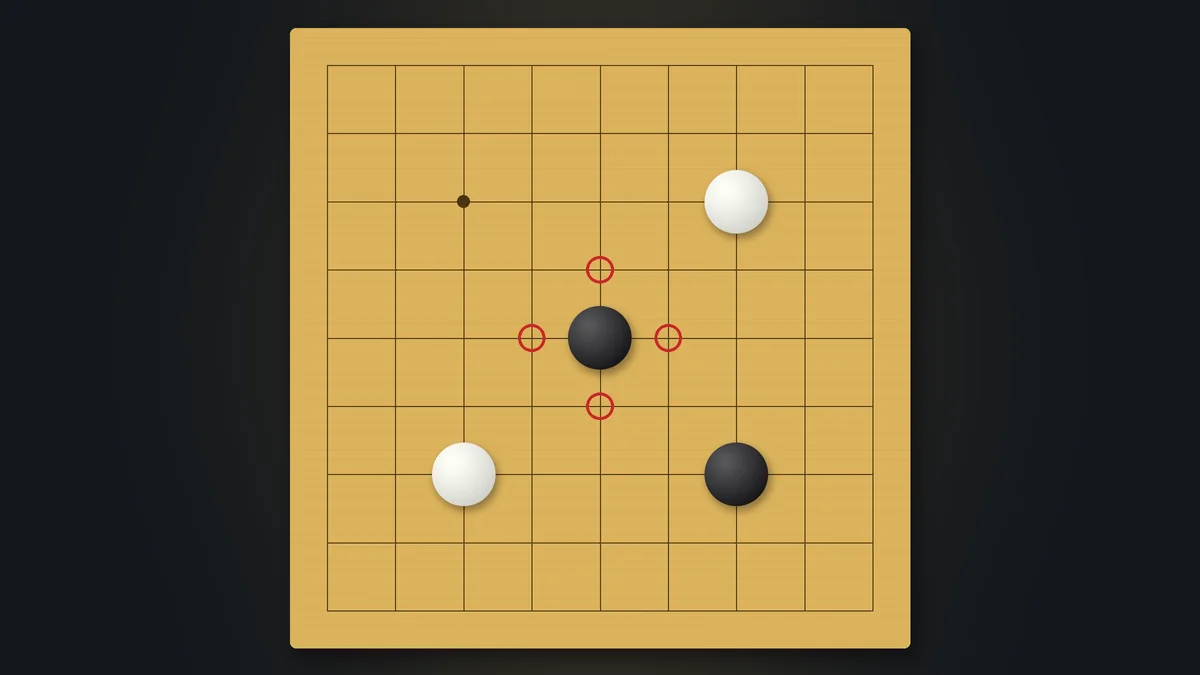
Go has a reputation for being difficult. The game is deep, but the rules are few, and a new player can be playing real games within an hour. What beginners need is the right order: learn a small thing, use it at once, then add the next.
This guide gives that order. It is the path most teachers use, and the one the first chapters of Learn Go on weigok follow.
Start small: use a 9 by 9 board
The full board has 19 lines each way and a game on it takes an hour. Do not start there. On a 9 by 9 board a game lasts ten minutes, everything you do has an immediate result, and you will meet every basic situation many times in a single evening. The rules are exactly the same on every board size, so nothing you learn is wasted.
Move to 13 by 13 when 9 by 9 games feel comfortable, and to 19 by 19 after that.
The six things to learn, in order
1. Placing stones and taking turns
Black plays first. Players take turns placing one stone on an empty intersection, where the lines cross. Stones do not move after they are placed. That is the whole of how a move is made.
2. Liberties and capture
The empty points next to a stone along the lines are its liberties. Stones of one colour that touch along the lines share their liberties as a group. When all of a group's liberties are filled by the opponent, the group is captured and removed.
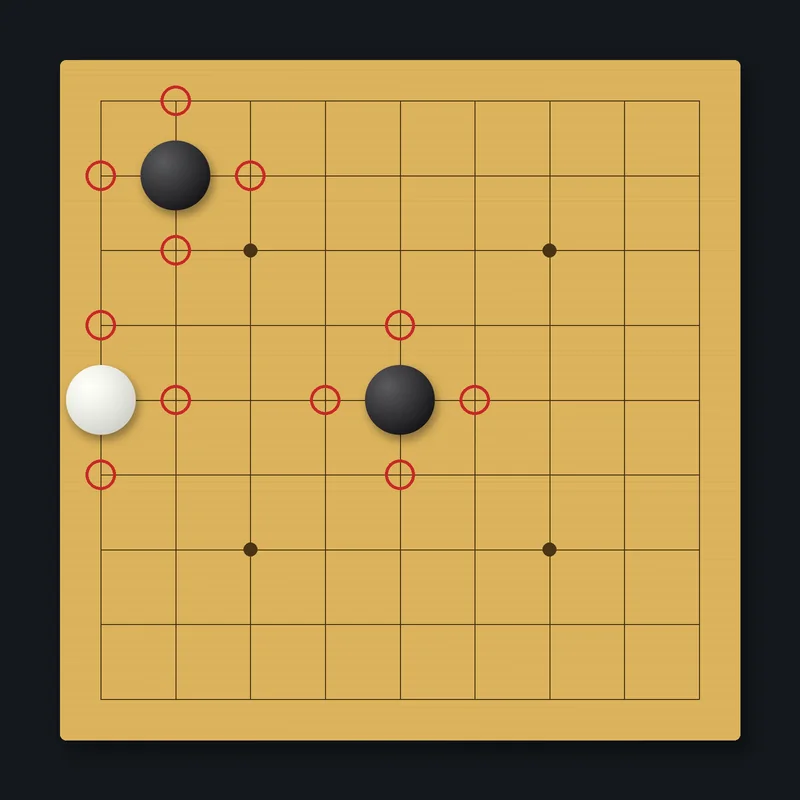
This is the first skill to practise. Before every move, count the liberties of the stones nearby, yours and the opponent's. A group with one liberty left is in atari and will be captured next move unless something is done.
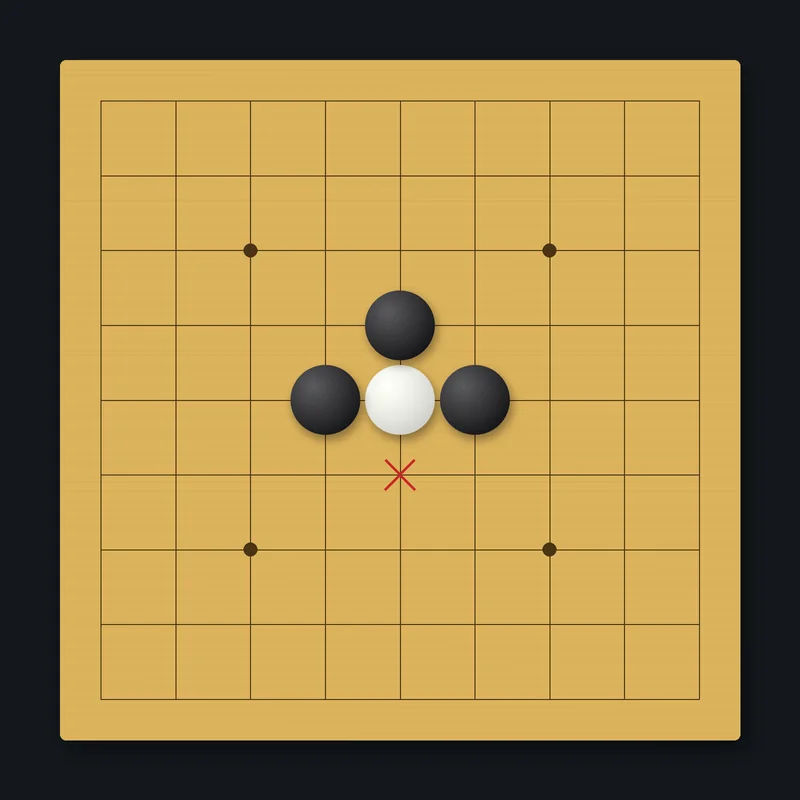
For your first few games, simply play to capture. A "capture game", in which the first player to capture a stone wins, is the best possible first lesson and takes two minutes to explain to a child.
3. Connecting and cutting
Stones that are connected are strong because they share liberties; stones that are separated can be attacked one by one. Much of Go at every level is the question of whether stones are connected. Learn the difference between stones that touch along a line, which are connected, and stones that touch only diagonally, which can be cut apart.
4. Moves you may not play: suicide and ko
Two restrictions complete the rules. You may not place a stone where it has no liberties, unless doing so captures. And under the ko rule you may not immediately retake a single stone if that would repeat the previous position; you must play somewhere else first.
Do not worry about ko at the start. It is enough to know the rule exists and to recognise the shape when it appears.
5. Two eyes: how groups live
This is the idea that turns capturing into Go. A group that surrounds two separate empty points, two eyes, can never be captured, because the opponent cannot fill both at once. Such a group is alive. A group that cannot make two eyes will eventually die.
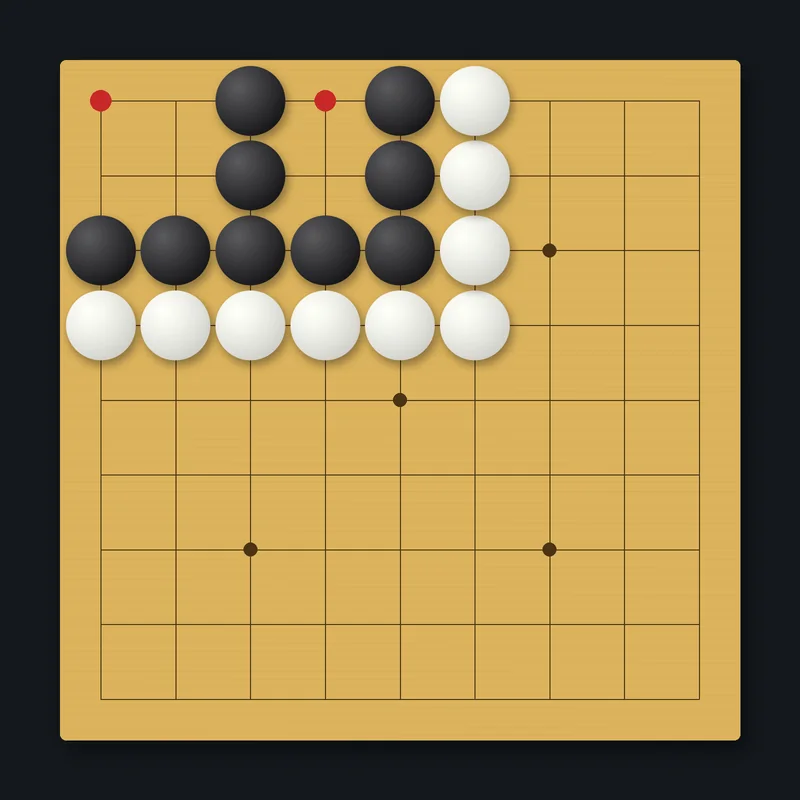
Once you understand eyes you will see why players do not chase every stone. The real question is always whether a group can make two eyes, or stop the opponent's group from doing so.
6. Territory and the end of the game
The game ends when both players pass. Each player then counts the empty points their living stones surround, adds the stones they captured (or, under Chinese rules, their stones on the board), and White adds the compensation points called komi. The larger total wins.
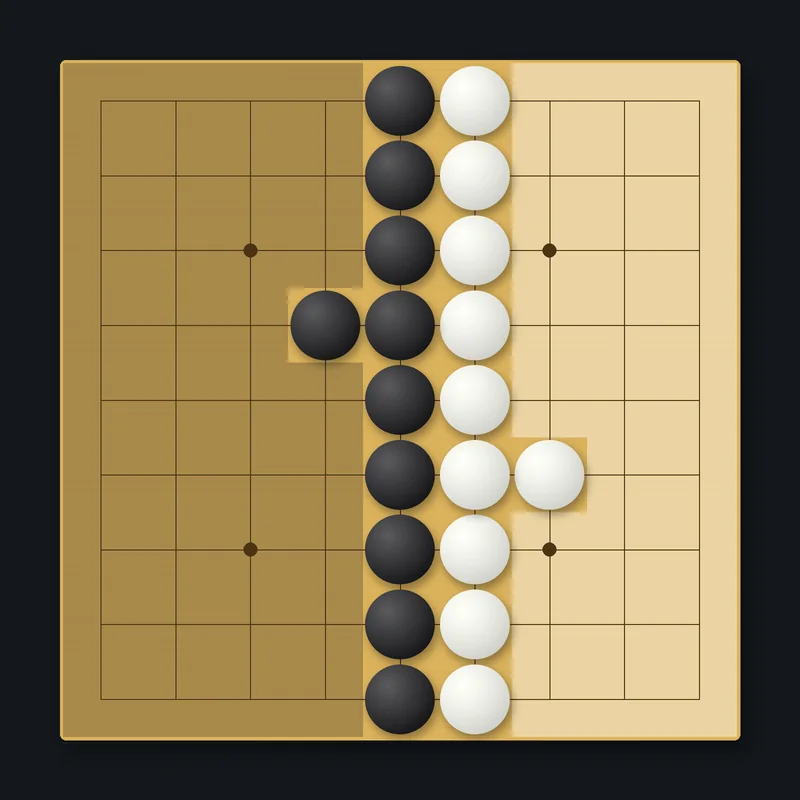
Beginners often find the end of the game the most confusing part. It becomes clear after a few games: when neither side can gain anything more, the game is over.
How to practise
Knowing the rules is the beginning. Skill comes from three activities, and you need all three.
Play. Play many quick games on a small board. An old piece of Go advice tells beginners to lose their first hundred games as fast as they can. The purpose of early games is to see situations, and winning will come later.
Solve problems. Capture problems and simple life-and-death problems train you to read: to see what happens after "I play here, they play there". Five easy problems a day is better than fifty on Sunday. The problems should be easy enough that you can solve most of them in under a minute.
Watch explained games. Seeing how stronger players use the same rules shows you what to aim for. Commentary matters here, because without it a strong player's moves are a mystery.
Mistakes almost every beginner makes
- Chasing stones that can escape. Check liberties before you attack.
- Saving every stone. Some stones are not worth it. Giving up two stones to gain elsewhere is often correct.
- Playing only next to the opponent's last move. Look at the whole board before each move.
- Filling your own eyes or territory. Every stone inside your own secure area loses a point.
- Memorising sequences without understanding. Ask what each move is for. Sequences you understand stay with you.
- Starting on 19 by 19. The board is too large to learn from at first.
A plan for your first month
Week 1. Learn turns, liberties and capture. Play capture games on 9 by 9. Do the first lessons of chapter 1 or 2 of Learn Go.
Week 2. Learn connection, ko and two eyes. Play full 9 by 9 games to the end and count the score. Start easy capture problems.
Week 3. Keep playing on 9 by 9 and try 13 by 13. Add easy life-and-death problems from Life & Death Analysis.
Week 4. Play your first 19 by 19 games. Learn the basic idea of the opening: corners first, then sides, then the centre. Watch one commented game in Game Record Commentary.
Fifteen to thirty minutes a day is enough. Regular short practice beats occasional long sessions.
Learning on weigok
On weigok every lesson is shown move by move on an interactive board, so you watch the stones being played and read the explanation for each one. The first 4 lessons of every chapter are free and need no account. The Contents page lists the whole course, and registered members can try things out on the free self-study go board.
When you have the basics, How to Get Better at Go explains what to work on next.